

UAE AI Strategy 2031: 2026 Progress Report
The UAE has quietly become the most AI-saturated economy on earth. As of Q1 2026, 70.1% of its working-age population uses generative AI — the highest rate of any country, according to the Microsoft AI Economy Institute. That is a remarkable headline for a National AI Strategy launched back in 2017.
But adoption is the easy part to measure. With five years left on the clock, the real question for business and investment leaders is sharper: is the UAE actually on track to hit the strategy's defining goal — AI driving roughly 20% of non-oil GDP by 2031? This progress report separates what has been delivered from what is still a promise.
Key Takeaways
- The UAE ranks #1 globally in AI adoption at 70.1% in Q1 2026, up from 64.0% six months earlier (Microsoft AI Economy Institute, May 2026).
- Infrastructure is scaling fast: the 5GW Stargate UAE campus has its first 200MW due online in 2026, with MGX targeting $100B in assets.
- The headline 20%-of-non-oil-GDP goal is the hardest to verify — adoption and compute are ahead, economic output is the open question.
- On capability maturity, BCG still rates the UAE an "AI Contender," not a top-tier "Pioneer."
For the strategy's full design — its four pillars, sector priorities, and governance — see our UAE National AI Strategy 2031 business guide. This piece focuses on momentum, not mechanics.
Where Does the UAE Stand on Its 2031 Goals in 2026?
As of Q1 2026, the UAE leads every country measured on AI adoption at 70.1%, more than double the United States' 31.3% and nearly four times the global average of 17.8% (Microsoft AI Economy Institute, Global AI Diffusion Report, May 2026). On usage, the strategy is comfortably ahead of where most planners would have projected.
The picture is best read as a scorecard. Adoption: ahead. Infrastructure: building at speed. Capital: abundant. Economic conversion — turning all of that into a fifth of non-oil GDP — is the line still being written. The gap between "world-leading adoption" and "world-leading economic output" is exactly where the next five years will be decided.
Is the 20% GDP Target on Track?
This is where confidence has to soften. The strategy's defining economic goal is for AI to contribute around 20% of the UAE's non-oil GDP by 2031 (UNESCO Policy Monitoring Platform, strategy launched 2017). Unlike adoption, there is no clean monthly index tracking progress toward it.
The most-cited economic estimate is PwC's: AI could add roughly $96 billion to the UAE economy — about 13.6% of GDP — the highest share in the GCC. One caveat investors should hold onto: PwC's modelling year is 2030, not 2031, and the figure predates the current investment wave (Khaleej Times, citing PwC, June 2025).
Read the numbers carefully. A separate, larger figure — AED 352.56 billion by 2030 — circulates widely but comes from TRENDS Research & Advisory, not PwC. Conflating the two inflates the apparent consensus. The honest read: credible models point to AI reaching the low-to-mid teens as a share of GDP by 2030, leaving the 20% non-oil-GDP target as a genuine stretch goal, not a foregone conclusion.
In 2026, the adoption-to-output gap is the metric that matters. The UAE has the users and, increasingly, the compute. What it has not yet demonstrated at national scale is the productivity conversion — and that is the variable the 2031 target ultimately rides on. For the deeper-stack view of how this gets built, see our explainer on why the UAE is building sovereign AI.
What's Been Built: Infrastructure and Compute
On infrastructure, the strategy has moved from policy to poured concrete. In May 2025, the UAE and US presidents unveiled Phase 1 of a 5GW AI campus in Abu Dhabi — described by the U.S. Department of Commerce as the largest AI infrastructure deployment outside the United States (U.S. Department of Commerce, May 2025).
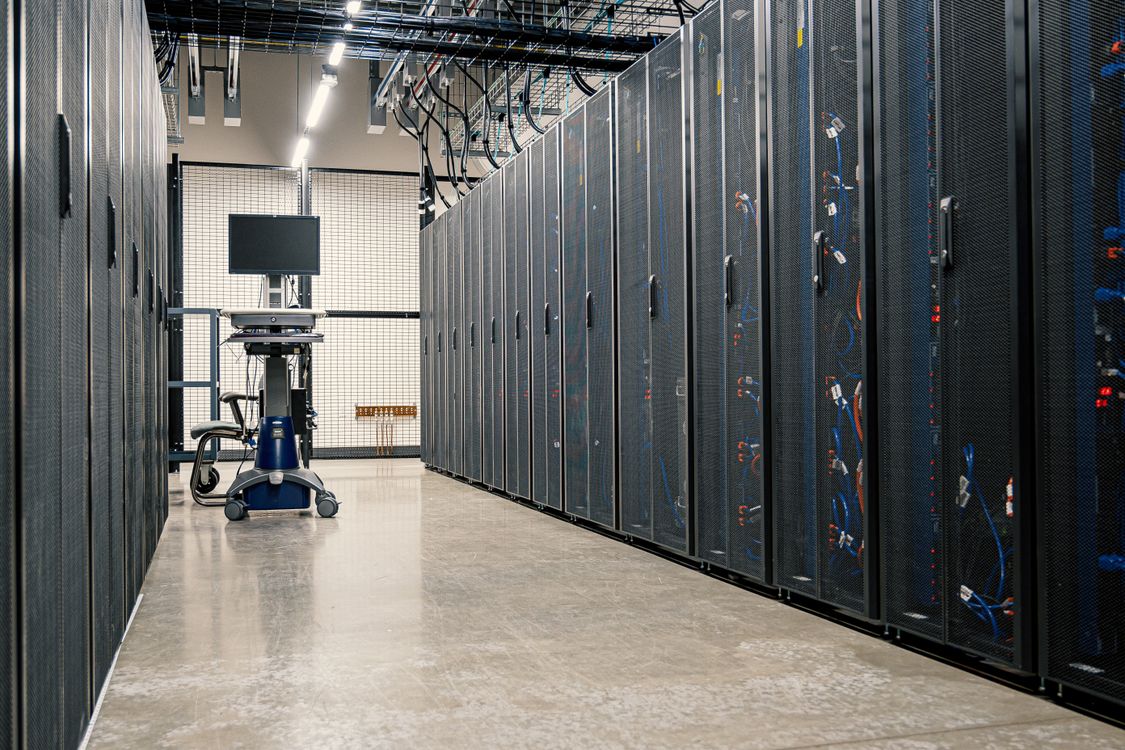
The anchor project is Stargate UAE: a 1GW compute cluster within that campus, backed by G42, OpenAI, Oracle, Nvidia, SoftBank and Cisco, with the first 200MW targeted to go live in 2026 (G42, May 2025). Compute at this scale is the physical precondition for the strategy — without it, sovereign models and national-scale deployment stay theoretical.
The capital behind it is just as deliberate. Microsoft committed $1.5 billion to G42 in 2024 and has since signalled total UAE commitments reaching $15.2 billion through 2029. Meanwhile MGX, the Mubadala–G42 investment vehicle launched in 2024, is targeting $100 billion in assets under management (AGBI, August 2025). This is not seed money chasing a trend — it is sovereign-scale capital building a platform. The data layer underneath it is its own undertaking, which we cover in building a sovereign AI data stack.
According to Microsoft's 2026 diffusion data and G42's project disclosures, the UAE now pairs the world's highest AI usage rate with one of its largest planned compute footprints — a combination no other mid-sized economy can currently claim. That pairing is the strategy's strongest single argument that 2031 is reachable.
Can the UAE Staff Its AI Ambitions?
Talent is the constraint most likely to bite before 2031. The UAE economy is projected to add more than 1.03 million jobs by 2030 — a 12.1% increase — with technology roles growing around 54% and requiring over 91,000 additional specialists (ServiceNow and Pearson, Workforce Skills Forecast 2025, via Khaleej Times, 2025). That is a steep hiring curve for a country of fewer than 11 million people.
The domestic pipeline is real but small relative to the need. MBZUAI, the dedicated AI university in Abu Dhabi, graduated its largest cohort in 2025 — 104 Master's and PhD students — and reports that roughly 80% of alumni stay in the UAE within a year (Middle East AI News, 2025). Retention is excellent; raw volume is the issue.
So the talent strategy leans on three levers at once: home-grown graduates, aggressive global recruitment via golden visas, and open-source capability through TII's Falcon model family (Technology Innovation Institute). Whether those scale fast enough is the workforce question we unpack in scaling AI talent development across the UAE.
World-Leading Adoption, Maturing Capability
Here is the nuance the headline number hides. The UAE is unambiguously first on AI usage, but usage and capability are different things. BCG's 2025 readiness analysis places the UAE in its "AI Contender" tier — strong and rising, but not yet among the top-tier "Pioneers" that lead on research depth and commercialization (BCG, The GCC AI Pulse, 2025).
Why does this distinction matter to investors? Because a population that uses AI heavily and an economy that produces frontier AI are valued differently. The UAE has decisively won the first race. The 2031 target implicitly assumes it can win the second — moving from world-class consumer to world-class producer in under six years. That is the bet. The compute build-out and sovereign-model push are precisely the moves you would make if you were trying to close that gap deliberately.
According to the Microsoft and BCG readings together, the UAE's profile in 2026 is unusual: top-decile adoption paired with mid-tier capability maturity. That is a solvable mismatch, and closing it — not adding more users — is what the remaining strategy period is really about. Doing it responsibly is its own challenge, covered in our responsible AI in the UAE guide.
What's Left Before 2031 — and What It Means for Investors
Three gaps stand between the UAE and its 2031 goal, and each is an investment thesis. First, economic conversion: turning adoption and compute into measurable non-oil GDP, which favours applied-AI ventures in finance, health, logistics and energy. Second, talent depth: the 91,000-specialist shortfall points to upskilling, education and recruitment platforms. Third, the data and capability layer that frontier models need.
For investors, the signal is durability. State-backed vehicles like MGX and multi-year commitments from global hyperscalers mean demand and capital are unlikely to evaporate with a single market cycle. The UAE has de-risked the infrastructure and capital side of the equation more thoroughly than almost any peer. What remains open — and therefore where returns concentrate — is the application and talent layer sitting on top of it.
The honest 2026 verdict: the UAE is ahead on the inputs and unproven on the output. That is a far stronger position than most national AI strategies can claim at their midpoint — but it is not the same as having already won. We'll keep tracking the milestones that matter; for the underlying plan, read our UAE National AI Strategy 2031 business guide.
Frequently Asked Questions
Is the UAE National AI Strategy 2031 on track in 2026?
Partly. On adoption, the UAE is ahead of schedule — it ranks first globally with 70.1% of working-age people using generative AI in Q1 2026 (Microsoft AI Economy Institute). Infrastructure is scaling fast through the 5GW Stargate UAE campus. The harder, longer-horizon goal — AI contributing roughly 20% of non-oil GDP by 2031 — depends on translating adoption and compute into measurable economic output, which remains the open question.
What is the UAE's AI GDP target for 2031?
The National AI Strategy 2031 targets AI contributing about 20% of the UAE's non-oil GDP by 2031. Separately, PwC has estimated AI could add roughly $96 billion to the UAE economy — about 13.6% of GDP — by 2030, the highest share in the GCC. The two figures use different baselines and years, so they should not be treated as interchangeable.
What is Stargate UAE?
Stargate UAE is a 1GW AI compute cluster being built in Abu Dhabi as the first phase of a planned 5GW UAE–US AI Campus, announced in May 2025. It is backed by G42, OpenAI, Oracle, Nvidia, SoftBank and Cisco. The first 200MW is expected to come online in 2026, making it one of the largest AI infrastructure projects outside the United States.
How does the UAE compare to other countries on AI adoption?
In Q1 2026 the UAE ranked first worldwide for AI adoption at 70.1%, far ahead of the United States (31.3%) and the global average of 17.8%, according to the Microsoft AI Economy Institute. On capability maturity, however, BCG classifies the UAE as an "AI Contender" rather than a top-tier "Pioneer" — strong on usage, still building depth in research and commercialization.
What does the UAE AI Strategy 2031 mean for investors?
It signals sustained, state-backed capital and demand. Vehicles like MGX (targeting $100 billion in assets) and commitments such as Microsoft's $15.2 billion through 2029 create a deep funding pool. For investors, the opportunity is concentrated in compute infrastructure, applied AI in priority sectors, and the talent and data services that the strategy still needs to scale.
The Bottom Line
At its midpoint, the UAE National AI Strategy 2031 is ahead on the inputs and unproven on the output:
- Adoption is won — #1 globally at 70.1%, and still climbing.
- Infrastructure and capital are committed — a 5GW campus, Stargate UAE, and sovereign-scale funds.
- The economic and talent conversion is the work that remains — and where the 2031 verdict will be decided.
For investors and operators, that combination is rare: most national strategies struggle to fund the infrastructure, let alone the demand. The UAE has done both. The next five years are about turning a nation of AI users into an economy of AI value. To go deeper on the strategy itself, read the UAE National AI Strategy 2031 business guide.
Sources
- Microsoft AI Economy Institute, Global AI Diffusion Report (Q1 2026), retrieved 2026-06-08, https://blogs.microsoft.com/on-the-issues/2026/05/07/the-state-of-global-ai-diffusion-in-2026/
- The National, UAE tops global AI adoption ranking (Microsoft data), retrieved 2026-06-08, https://www.thenationalnews.com/future/technology/2026/05/07/uae-ai-ranking-adoption-microsoft/
- UNESCO Policy Monitoring Platform, UAE National AI Strategy 2031, retrieved 2026-06-08, https://www.unesco.org/creativity/en/policy-monitoring-platform/national-ai-strategy-2031-and-national-program-artificial-intelligence
- Khaleej Times, AI expected to contribute over $96 billion to the UAE's GDP (citing PwC), retrieved 2026-06-08, https://www.khaleejtimes.com/business/ai-expected-to-contribute-over-96-billion-to-the-uaes-gdp-by-2031
- PwC Middle East, The potential impact of AI in the Middle East, retrieved 2026-06-08, https://www.pwc.com/m1/en/publications/potential-impact-artificial-intelligence-middle-east.html
- U.S. Department of Commerce, UAE and US presidents attend unveiling of Phase 1 of new 5GW AI campus, retrieved 2026-06-08, https://www.commerce.gov/news/press-releases/2025/05/uae-and-us-presidents-attend-unveiling-phase-1-new-5gw-ai-campus-abu
- G42, Global Tech Alliance Launches Stargate UAE, retrieved 2026-06-08, https://www.g42.ai/resources/news/global-tech-alliance-launches-stargate-uae
- Microsoft, Microsoft invests $1.5 billion in Abu Dhabi's G42, retrieved 2026-06-08, https://news.microsoft.com/2024/04/15/microsoft-invests-1-5-billion-in-abu-dhabis-g42-to-accelerate-ai-development-and-global-expansion/
- AGBI, MGX to raise $25bn for AI push, retrieved 2026-06-08, https://www.agbi.com/ai/2025/08/mgx-to-raise-25bn-for-ai-push/
- Middle East AI News, MBZUAI graduates record AI cohort, retrieved 2026-06-08, https://www.middleeastainews.com/p/mbzuai-graduates-record-ai-cohort
- ServiceNow & Pearson, Workforce Skills Forecast 2025 (via Khaleej Times), retrieved 2026-06-08, https://www.khaleejtimes.com/business/uae-set-to-lead-global-workforce-growth-with-more-than-1m-new-jobs-by-2030
- BCG, The GCC AI Pulse, retrieved 2026-06-08, https://www.bcg.com/publications/2025/the-gcc-ai-pulse-mapping-the-regions-readiness-for-an-ai-driven-future
- Technology Innovation Institute, Falcon LLM, retrieved 2026-06-08, https://falconllm.tii.ae/